Turning Waste into Worth: Inside CoFTI’s Food Loss and Food Waste Action Lab
When we think of food waste, most of us picture leftovers scraped off a plate. But the reality is far bigger and far more urgent. According to UN Food and Agriculture Organisation, about 1.3 billion tonnes of food, or one-third of the food produced globally is lost or wasted annually. Food loss and waste is what is lost after harvest, during processing, in transport, on store shelves, or in our own kitchens.
The invisible losses in this staggering loss also include the waste of the labour, water, land, and energy that went into producing this food. It's a loss of nutrients that could have been valorised and a lost opportunity to nourish people in a country where undernutrition and overnutrition sit side by side.
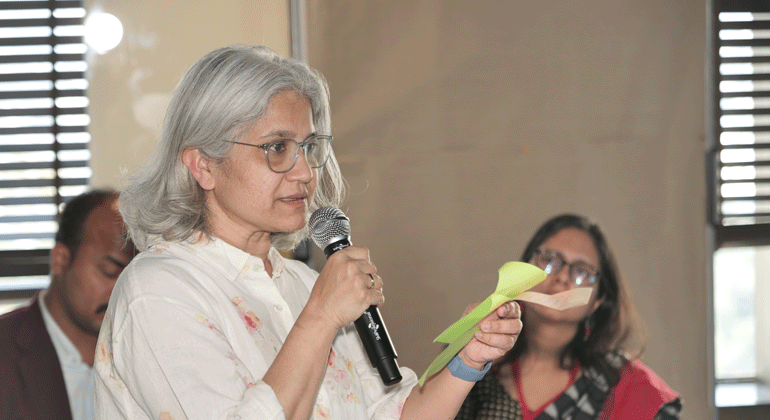
"Globally, one-third of the food produced is wasted. In India, that number is about 40%. The food that’s lost and wasted still holds a lot of nutrition. It can feed the undernourished, it can become functional ingredients that address health problems like diabetes and heart disease."
— Rinka Banerjee, Founder, Thinking Folks Consulting; Facilitator, CoFTI Food Loss and Food Waste Action Lab
A systems problem that needs a systems solution
Food loss and waste isn’t a single-actor problem; it’s the result of multiple cracks in the value chain. Some start right at the farm, where fruits, vegetables, and grains are discarded due to cosmetic imperfections or lack of timely harvesting. Others appear in storage and transport, where inadequate facilities mean fresh produce spoils before it reaches consumers.
"Good agricultural practices are important at the farm level. But storage, transportation, and distribution conditions are equally critical. Without the right temperatures and warehousing, food loss is inevitable," explains Banerjee, who has been an active member of CoFTI's Action Lab 4 on valorising Food Loss and Waste.
And then there’s a third, less visible gap: Scientific Research. At the Roundtable on Food Loss and Waste Valorising in India, held in Bengaluru in September 2025, the clear message that emerged was that we need more research grants, more technology, and more ways to extract value from waste and make it commercially viable.
From waste to value: The promise of valorisation
One of the Action Lab’s core approaches is valorisation: transforming what we call waste into valuable, nutrition-rich products.
Think banana peel fibre and pineapple pomace for example: Considered waste, these are rich in dietary fibre and resistant starch, beneficial for gut health and blood sugar control and can be turned into high-value ingredients.
Or spent grains from the brewery industry. Startups are already using these high-fibre 'waste' to add nutrition to bread and flour. If scaled up, this could improve nutrition for millions!
The double burden: Undernutrition and Overnutrition
India’s paradox is stark: Undernutrition due to lack of access to nutritious food on the one hand, and diet-related overnutiriton and non-communicable diseases are on other. Members of the FLW Action Lab unanimously believe that the food we lose could help address both these issues.
Food waste valorisation is not just a human health issue; it’s an environmental one. Wasted food decomposes in landfills, releasing methane, a potent greenhouse gas. Contaminants leach into the soil and water. The resources (water, fertiliser, and energy) used to produce that food are also wasted.
Working across Action Labs
The Food Loss and Food Waste Action Lab doesn’t work in isolation. It collaborates with other CoFTI Action Labs like Agroecology, which tackles post-harvest losses through better farming practices, and Food Literacy, which helps consumers understand the impact of waste and change their habits.
It’s about seeing the whole picture. Reducing losses after harvest. Encouraging mindful consumption at home and in restaurants. Building food recovery systems, like community food banks, to redistribute surplus.
From conversation to action
So far, the Action Lab on FLW has developed a 'Scoping Report on the Food Waste and Valorisation in India'. It maps the scale of the problem, spotlights promising startups, and identifies academic research that can be scaled. Action Lab 4 members are also deliberating ways to mobilise funding and grants to fuel innovation in this space. What is needed now is to create traction around the issue of Food Loss and Waste, with farmers, businesses, policymakers and consumers. The challenge is enormous, but so is the opportunity. Every kilogram of food saved is a step toward better nutrition, stronger livelihoods, and a healthier planet.