Making Food Business, Good Business: Ingredient Science as Empowerment
Walk into any supermarket and the choices are dazzling: bright packets, promising flavours, convenience, and labels claiming health benefits.
But behind the scenes lies a long journey — one shaped by decisions about sourcing, processing, packaging, pricing, and policy. Every product on the shelf reflects a system. You may think your purchase was entirely your decision, but what determined which foods made it to that shelf in the first place?
So we must ask: Who decides what we eat?
The CoFTI Action Lab on Food Businesses takes on a crucial part of that question:
What action is needed to make food businesses good businesses — healthy for people, fair to producers, and sustainable for the planet?
Beyond Profit: Food as a Force for Good
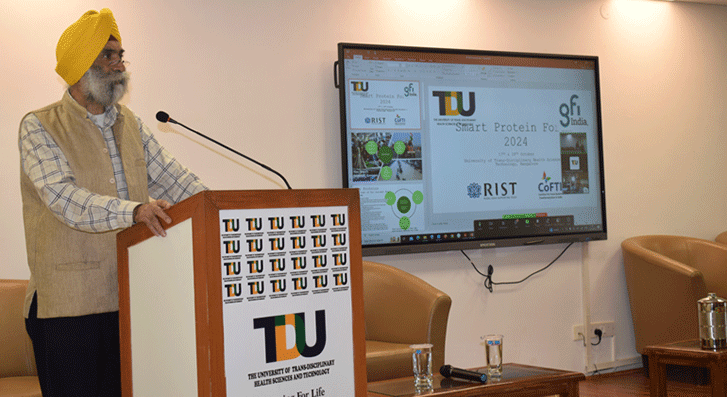
Dr. Gurmeet Singh, Professor & Dean at the TransDisciplinary University (TDU) and an active member of CoFTI, has long worked at the intersection of food, science, and sustainability. “Food is not just a business for profit. It should be food that is good for people, good for the planet, and good for society.” Singh has been a key actor in the Food Businesses Action Lab, which seeks to reimagine how enterprises of all kinds — from large corporations to farmer collectives to agile startups —
can contribute to that vision.
The Action Lab’s main focus is on Small food producers such as Farmer Producer Organisations (FPOs), Women’s Self-Help Groups, and community enterprises rooted in local ecosystems. The key question for members of AL 3 is: How do we experiment, disrupt, and rethink value chains?
Bridging the Gap Between Big and Small Food
India’s food landscape is a study in contrasts. Large food companies possess advanced laboratories, food technologists, modern processing units, and marketing reach. Small producers, meanwhile, hold deep knowledge of local crops, medicinal values of plants and food, traditional processing, and community networks — but often lack access to ingredient science, quality assurance systems, modern packaging guidelines and the capital to scale production.
While both make the Indian plate, without support, small producers face an uneven battle for shelf-space and consumer trust. Take the case of millets. This grain is climate-resilient, nutrient-rich, and part of India’s agricultural heritage. Yet transforming millets into food products that are as soft as wheat bread, as convenient as rice-based snacks, or as appealing to children requires understanding:
- Protein Structure
- Starch Behaviour
- Hydration dynamics
- Shelf-life science
- Texture modification without nutrient-loss
Large food companies have in-house R&D teams to solve these puzzles. Most small producers do not have access to these. This is where ingredient science becomes a tool for empowerment.
CoFTI’s Action Lab 3 tries to bridge this knowledge gap — with an aim to support small enterprises with:
- Scientific understanding of ingredients
- Product reormulation for better nutrition, such as improved protein content
- Improved processing techniques
- Food safety
- Packaging and labelling guidance
Through ingredient science and innovation, small producers can improve products with new protein sources, create nutrient-dense foods from wild and forgotten foods, improve oil stability and shelf-life, improve digestibility and bioavailability, and reduce environmental impact.
In July 2025, CoFTI and TDU hosted a hands-on workshop titled “From Consumer Need to Consumer Delight: A Consumer-centric Approach to New Food Product Development”. Thirty-three women entrepreneurs from Self-Help Groups in Odisha —already engaged in millet processing — came together to explore plant-protein innovation. Over two days, the teams developed multi-grain formulations, created protein-rich snacks and beverages, learned about anemia prevention and food safety practices, explored techniques for shelf-life extension and integrated wild edibles and Ayurvedic knowledge into product design. The workshop demonstrated how science, tradition, and entrepreneurship can combine to build viable, nutrition-focused small businesses.
As Dr. Gurmeet puts it, “We need at least 25% of the food on our plates every day to come from small producers. That’s how we build diversity, resilience, and fairness into our food system.” In this quest, ingredient science acts not just as laboratory knowledge, but economic justice in action.