Small Kitchens, Big Change: Women Powering Millet Enterprises Without Ovens
Across Andhra Pradesh, a quiet shift is unfolding. It is visible in kitchens, village markets, and community spaces. It does not begin with large investments. It starts with what women already have: a pressure cooker, some millets, and years of cooking experience.
The ViSV Shakti Women Leadership Network builds on this. It works with the Society for Elimination of Rural Poverty (SERP), Government of Andhra Pradesh. The idea is simple. Enterprise can begin with capability, not infrastructure. Women from self-help groups are supported to become entrepreneurs and leaders in millet-based economies.
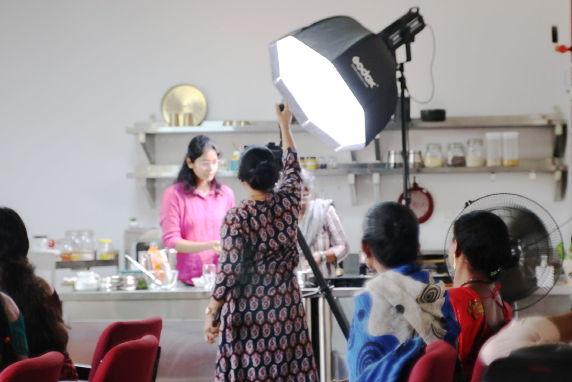
As Himanshu Kapoor, master trainer, explains, these women have cooked all their lives. Learning new recipes is not the challenge. What they need is imagination and validation.
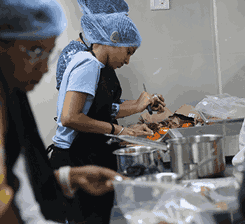
In training, they use the same utensils found in their homes. They make products like cakes and cookies using millets. The point is clear. Skill and intent matter more than equipment.
For most rural women, cooking is daily work but not seen as an economic skill. It stays inside the home. ViSV Shakti connects this work to markets. Women learn not just cooking, but also pricing, packaging, and selling.
Familiar foods like ragi porridge and jowar rotis are turned into noodles, snacks, and baked products. The shift is simple. They move from cooking for the family to producing for the market.
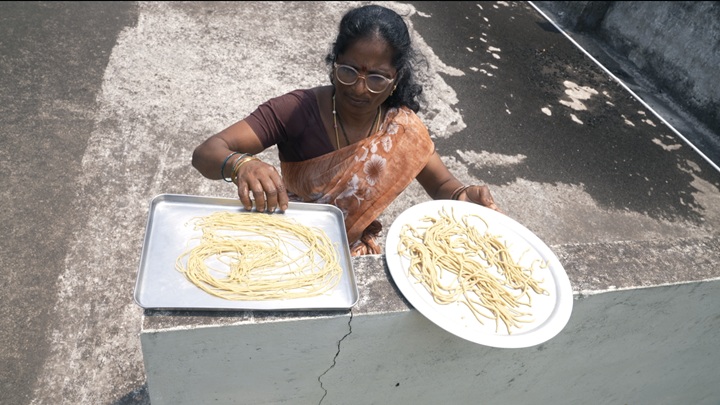
Vijaylakshmi from Uttrapalli village shows how this works. She is 43 and part of a self-help group. She managed her home and helped on the farm. She never thought of herself as an entrepreneur. She believed noodles were made in factories. In a training, she learned to make them using a hand machine and a tin cooker. She tried it at home. Her grandchildren loved it. She then dried the noodles in the sun, like many traditional foods. It worked.
Her jowar noodles became popular. At an exhibition in Delhi, she found a bulk buyer. Today, she earns about ₹40,000 a month. She later returned for another training. This time, she taught other women her method, including a chilli-flavoured version. Her investment is still small, but her role has changed. She now earns and mentors others. As she says, she still cooks in the same kitchen, but it now feels like a business.
This initiative aligns with the Global Programme for Food Systems Transformation (GV TES) led by BMZ and implemented by GIZ, and is being integrated in India through the Coalition for Food Systems Transformation in India (CoFTI).
“The programme is not just about income - it is about leadership. Through the Women Leadership Network, women begin to build confidence. They meet other women, travel beyond their villages, and engage with markets and government systems.
Over time, they stop seeing themselves as just participants and start seeing themselves as decision-makers. This shift from earning to leading is what makes the change long-lasting,” says Vishalakshi Vuyyala, Founder of VISV Foundation, facilitator and on-ground action leader of the CoFTI network, and Project Consultant for Gender Transformative Action initiatives in India supported by GIZ.
The focus on millets is linked to a larger need. Andhra Pradesh faces water stress. Rainfall is uneven. Groundwater levels are falling. Many crops need a lot of water. Millets are different. They need less water. They grow well in dry conditions and can survive in poor soil. For the state, millets are a practical solution. They support both farming and sustainability.
But growing millets is not enough. People also need to eat them. Over time, millets disappeared from daily diets due to changing food habits. The programme works on this gap. It helps create products that people want to buy. Noodles, snacks, and baked goods make millets more relevant today. This connects nutrition, climate, and income.
The model is designed to grow. It builds on existing self-help group networks. It combines training with business and market access. It also builds leadership. Many small enterprises are created, not just one large one. Each is local but connected.
This approach changes how we think about entrepreneurship. It does not begin with money or infrastructure. It begins with what women already know. It builds on what they already have. From a simple kitchen, a business can grow. From there, a larger change begins.