Food Business: Enterprises for Good Food
Walk into any supermarket and the choices are dazzling, bright packets promising flavour, convenience, and sometimes even health. But behind every packet, there’s a chain of decisions that shapes not just what we eat, but how that food is grown, transported, packaged, and brought to our shelves and how each step leaves its mark on our health, our farmers, and our planet.
Today, food is more than a commodity. It’s a public good. And the way food businesses operate can either nourish or harm – communities, economies, and ecosystems.
That’s why the Food Businesses Action Lab of the Coalition for Food Systems Transformation in India (CoFTI) exists: to help turn “big food” into good food-food that is healthier for people, kinder to the planet, and fairer for society.
Beyond Profit: Food as a Force for Good
"Food is not just a business for profit. It should be food that is good for people, good for the planet, and good for society."
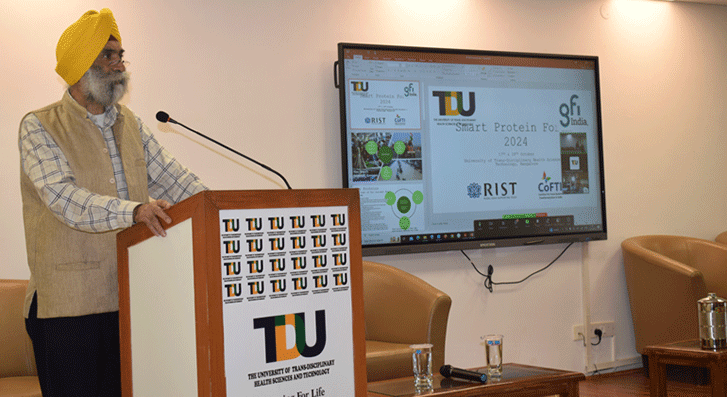
— Dr. Gurmeet Singh, Professor & Center Head at TransDisciplinary University; Facilitator, Food Businesses Action Lab
The Action Lab takes that statement seriously. It’s about reimagining how different kinds of food enterprises from global corporations to farmer collectives to nimble startups can play a role in making this vision real. CoFTI collaborates with three key groups:
- Big food companies: large, established players with wide reach and resources.
- Small food producers: Farmer Producer Organisations (FPOs), women’s self-help groups, and community enterprises rooted in local ecosystems.
- Startups: agile innovators willing to challenge norms and explore radical ideas.
Bridging the Gaps Between Big and Small
India’s food landscape is a tale of contrasts. On one side, big food companies have advanced R&D, modern processing facilities, and marketing muscle. On the other hand, small producers work with deep knowledge of local crops, traditional processing methods, and community-based distribution but often lack access to scientific expertise or the capital to scale.
Both deserve a place on the Indian plate. But without support, small producers face an unfair fight for shelf space and consumer attention.
Take millets, for example. They’re climate-resilient, nutrient-rich, and part of India’s heritage. But making millet-based products as appealing, affordable, and accessible as wheat or rice-based ones requires understanding millet at a scientific level, its protein structure, how it behaves in baking, and how it can be made soft without losing nutrition. Big food has the labs to solve these puzzles. Small food often doesn’t.
CoFTI’s goal is to bridge this gap-giving small producers the ingredient science, quality standards, and packaging know-how they need to stand shoulder-to-shoulder with industrial products. As Dr. Gurmeet puts it,
“We need at least 25% of the food on our plates every day to come from small producers. That’s how we build diversity, resilience, and fairness into our food system.”
Startups: The Innovation Edge
If big food is the steady giant and small food is the local hero, startups are the disruptors. They bring fresh thinking not just to ingredients and recipes, but also to circularity finding ways to turn waste into value.
For example, India produces hundreds of billions of kilos of crop residues like rice straw and wheat straw every year. Most of it is underutilised. Startups could develop ways to convert some of that biomass into edible nutrients creating new value streams while reducing environmental waste.
Mushroom cultivation is one example. Certain mushrooms can grow on straw, transforming something inedible into a nutritious, marketable food. That’s upscaling taking a low-value byproduct and turning it into something valuable for human diets.
Protein: the next frontier
If there’s one nutrient that sparks both aspiration and environmental concern, it’s protein. Proteins are essential for growth, muscle health, immunity, and energy. But producing them, especially animal proteins, often comes with high environmental costs in terms of land, water, and greenhouse gas emissions.
That’s why plant proteins are emerging as a powerful alternative. They can reduce our dependence on resource-intensive animal protein while supporting nutrition security particularly for vulnerable communities. But for plant proteins to become a daily choice rather than an occasional substitute, they need to be tasty, digestible, affordable, and available in convenient formats.
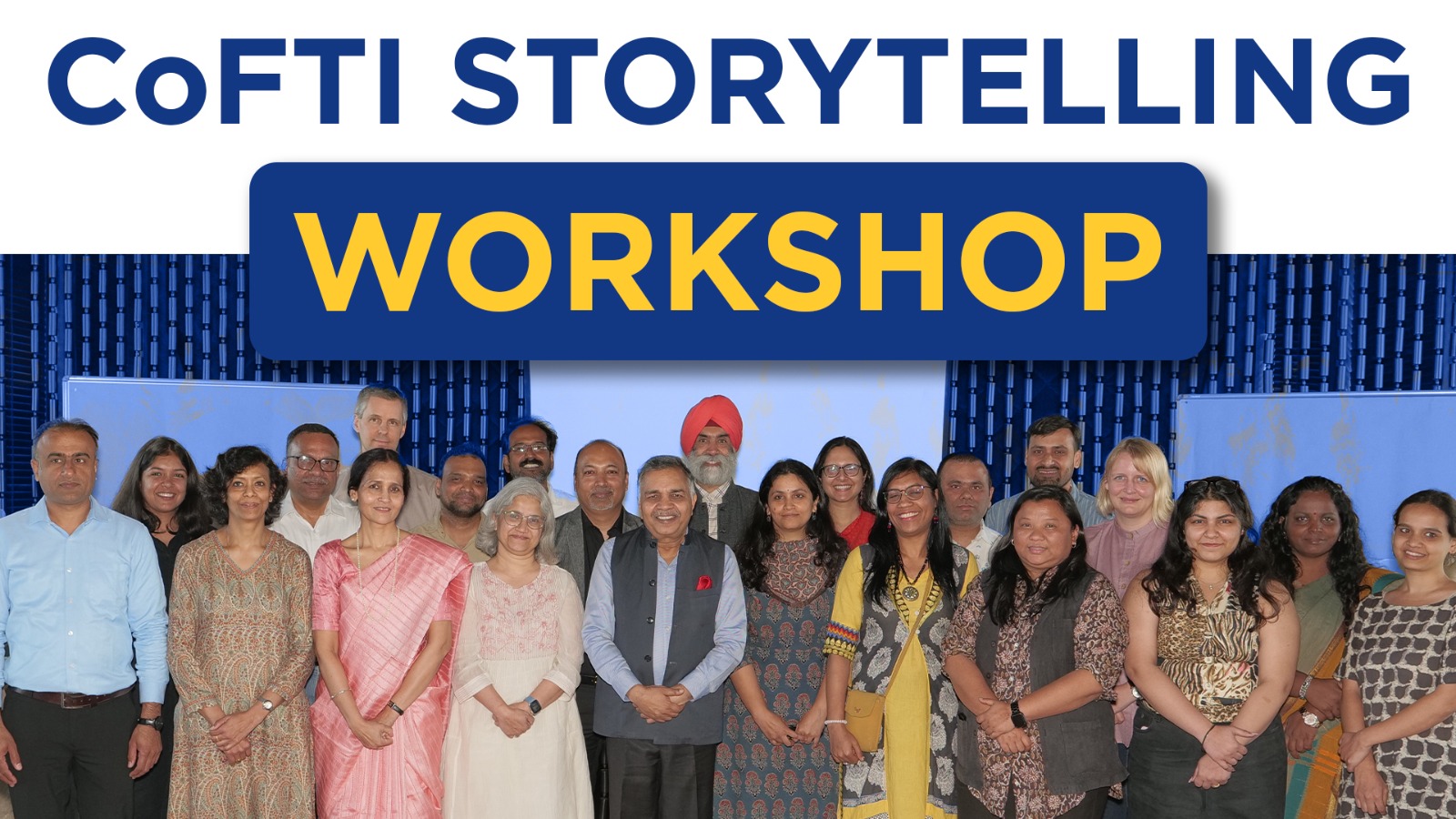
This is exactly what CoFTI and its partners are working on. In July 2024, CoFTI and TransDisciplinary University (TDU), Bengaluru, hosted a hands-on workshop “From Consumer Need to Consumer Delight”. Thirty-three women entrepreneurs from Self-Help Groups in Odisha already engaged in millet processing came together to explore how plant proteins can power women-led food innovation.
Over two days, participants experimented with multi-grain recipes, created plant-protein-rich snacks like protein bars and plant-based beverages, and learned about anemia prevention, food safety standards, and techniques to extend shelf life. They also foraged in Ayurveda gardens, explored wild edibles, and discovered how to blend local wisdom with modern product innovation.
Led by Gurmeet Singh, the workshop demonstrated exactly what the Food Businesses Action Lab stands for: turning grassroots enterprise into a driver of better nutrition, sustainable food systems, and viable livelihoods.
The challenge of change
If transforming food businesses were easy, it would already be done. But Gurmeet identifies three main hurdles:
- Knowledge: Knowing what the “right thing” looks like. Businesses need clear, science-backed guidance on how to make their products healthier and more sustainable.
- Human capacity: Even when the knowledge exists, scaling it requires skilled people who can implement new practices in sourcing, processing, and distribution.
- Sunk costs: Large food companies have invested heavily in equipment and systems designed for existing products. Shifting to new processes often requires capital investments and time.
Addressing these challenges calls for collaboration between scientists, policymakers, entrepreneurs, and communities.
Why the Action Lab model works
CoFTI’s Action Labs aren’t just committees -they’re spaces to experiment. By treating pilots as learning experiments, they take away the fear of failure. If something doesn’t work, it’s simply a step toward a better solution.
For the Food Businesses Action Lab, this means:
- Prototyping healthier formulations for popular products.
- Supporting FPOs and self-help groups to develop competitive, quality-assured small food brands.
- Helping startups test models for waste-to-food innovation.
- Encouraging large companies to set targets for “good food” product lines.
The aim is not to create marginal change but transformation.
The bigger picture: Why this matters
Transforming food businesses isn’t just about better snacks or more millet in the market. It’s about reshaping the food environment so that healthier, fairer, and more sustainable choices become the norm- for everyone.
When big food adopts better practices, the impact is immediate and far-reaching because of their scale. When small food thrives, local economies strengthen and food diversity increases. When startups succeed, they push the boundaries of what’s possible and inspire others to follow.
Together, these three forces can move us toward a future where good food is not a niche luxury, but the default choice.
Looking ahead: from plate to policy
The journey from idea to transformation is a long one. But with the Action Lab’s diverse network-scientists, industry leaders, community groups, government agencies the pieces are coming together.
Policy support will be key:
Together, these three forces can move us toward a future where good food is not a niche luxury, but the default choice.
- — Incentives for reformulation of processed foods.
- — Grants and technical assistance for small producers.
- — Investment in alternative protein research.
- — Support for waste-to-food innovations.
The goal is not simply to reform the existing food system, but to redesign it so that the incentives align with public health, environmental sustainability, and social equity.
CoFTI’s Food Businesses Action Lab is a space meant for collaboration. It’s where ideas are tested, connections are built, and new possibilities emerge. It’s where profit and purpose can sit at the same table and serve good food.
As Dr. Gurmeet remind us:
“Transformation won’t happen in silos. It takes farmers, scientists, policymakers, businesses, and consumers working together to make good food the rule, not the exception.”